
Five questions, in the order they actually work.
You asked for five cards from the deck, so here they are — front and back, exactly as they're printed. Not five questions picked at random: five stops on the route people tend to take when something in their working life needs to change. Start at the top and work down.
Three rules before you start
- One at a time
- Not all five tonight. A question you have properly sat with beats five you have skimmed.
- Wait for the second answer
- If an answer arrives instantly it is rehearsed, and it is the one you would give in an interview. Sit still. The second one is the honest one.
- Read the back afterwards
- The nudge on the reverse is what I would say next if we were in the room. It only works once you have answered for yourself.
Why these are harder than they look
You already know how to answer questions in a meeting. These aren't those. Most of what runs your working life — what you'll tolerate, what counts as success, how much is enough — was settled a long time ago by someone who wasn't you, and it has been running quietly in the background ever since. These questions are built to interrupt that. Expect a bit of resistance around question two.

From who you are to what changes on Monday
Five stops. Each one draws on a different part of the deck, and between them they touch all twelve themes in it.
The ground
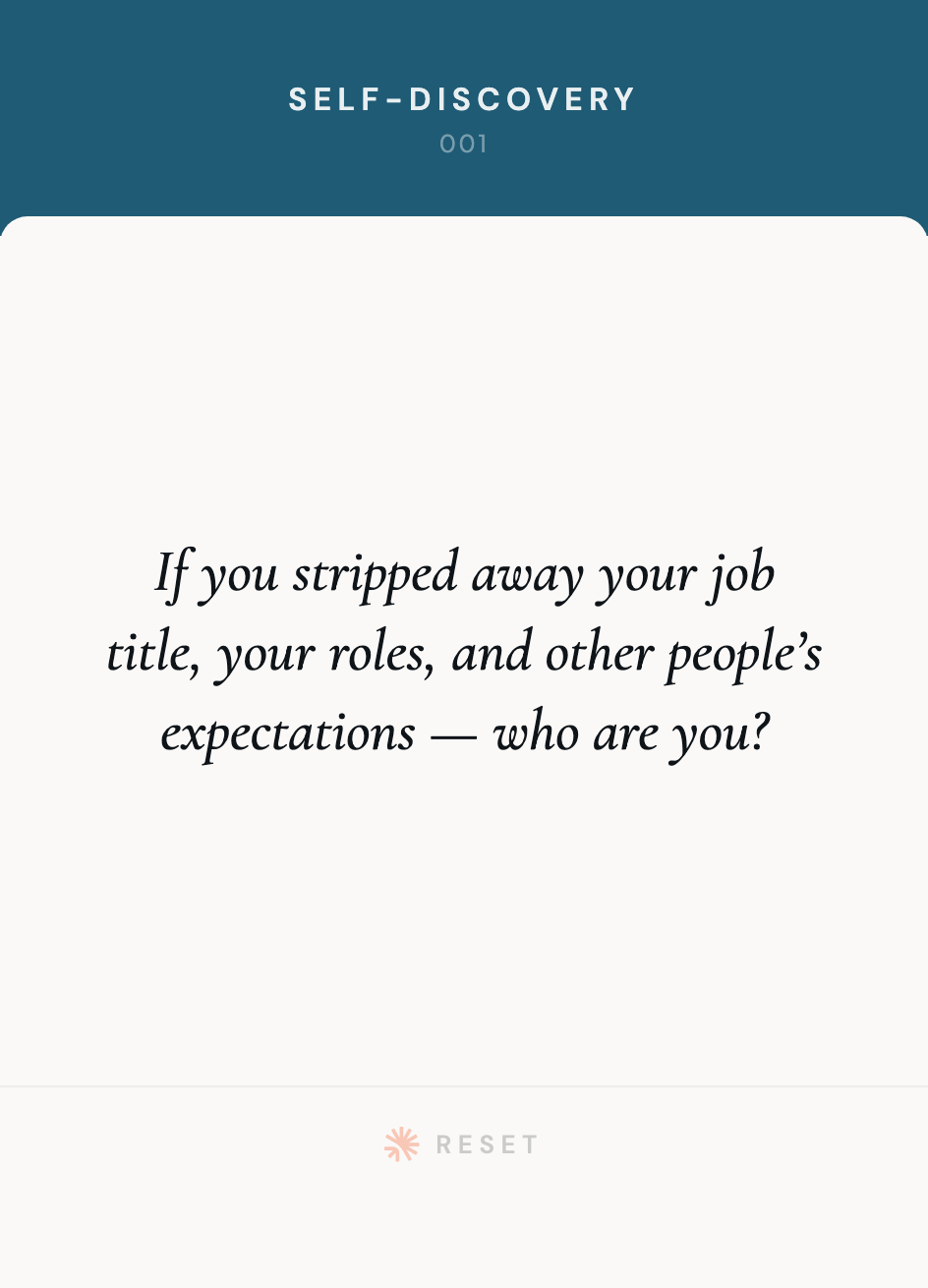
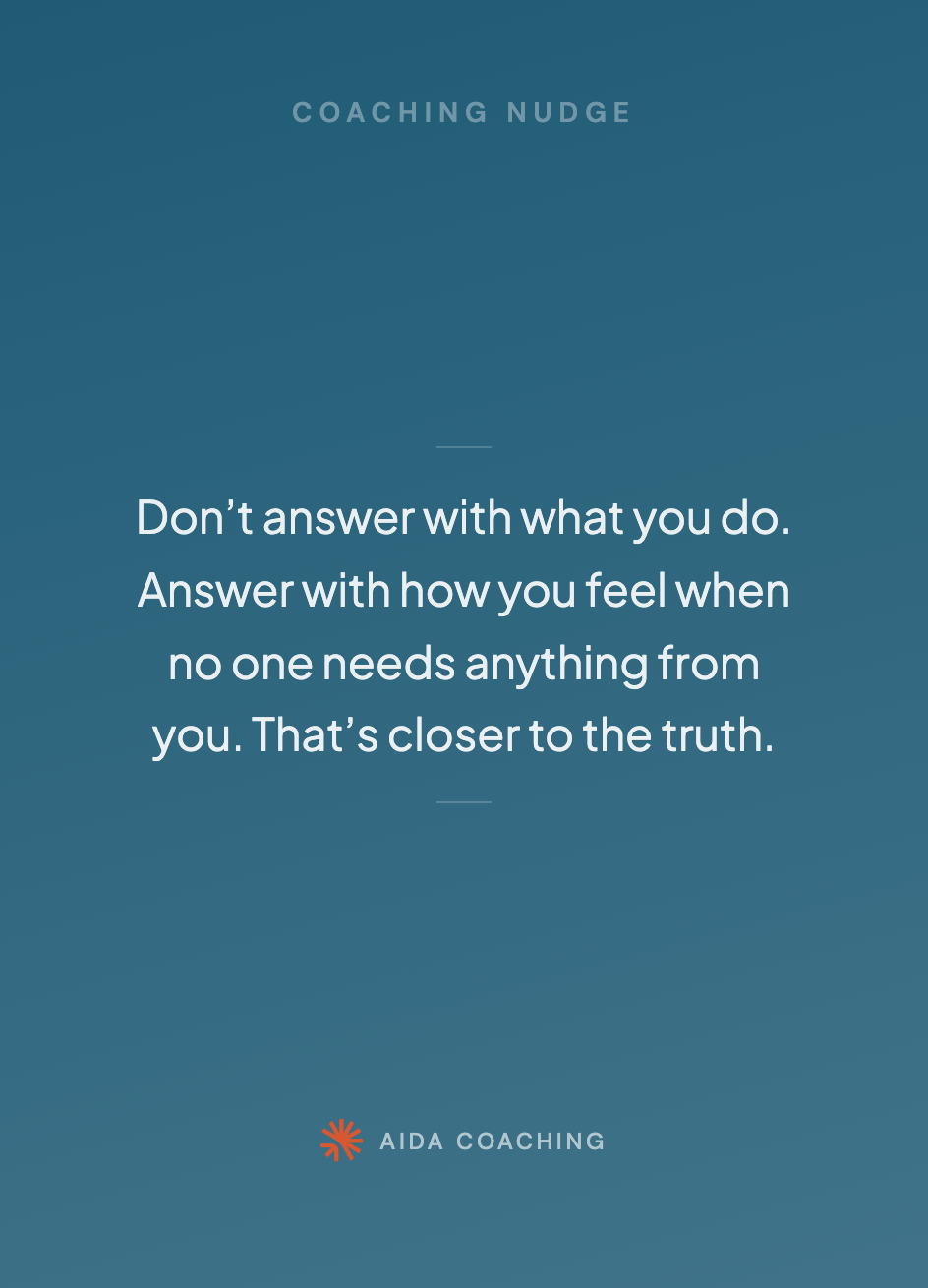
Before anything moves, you need to know what you're standing on. Ask most senior people who they are and you'll get a job title back. That's a role, not a person. Roles get reorganised out from under people all the time.
The block
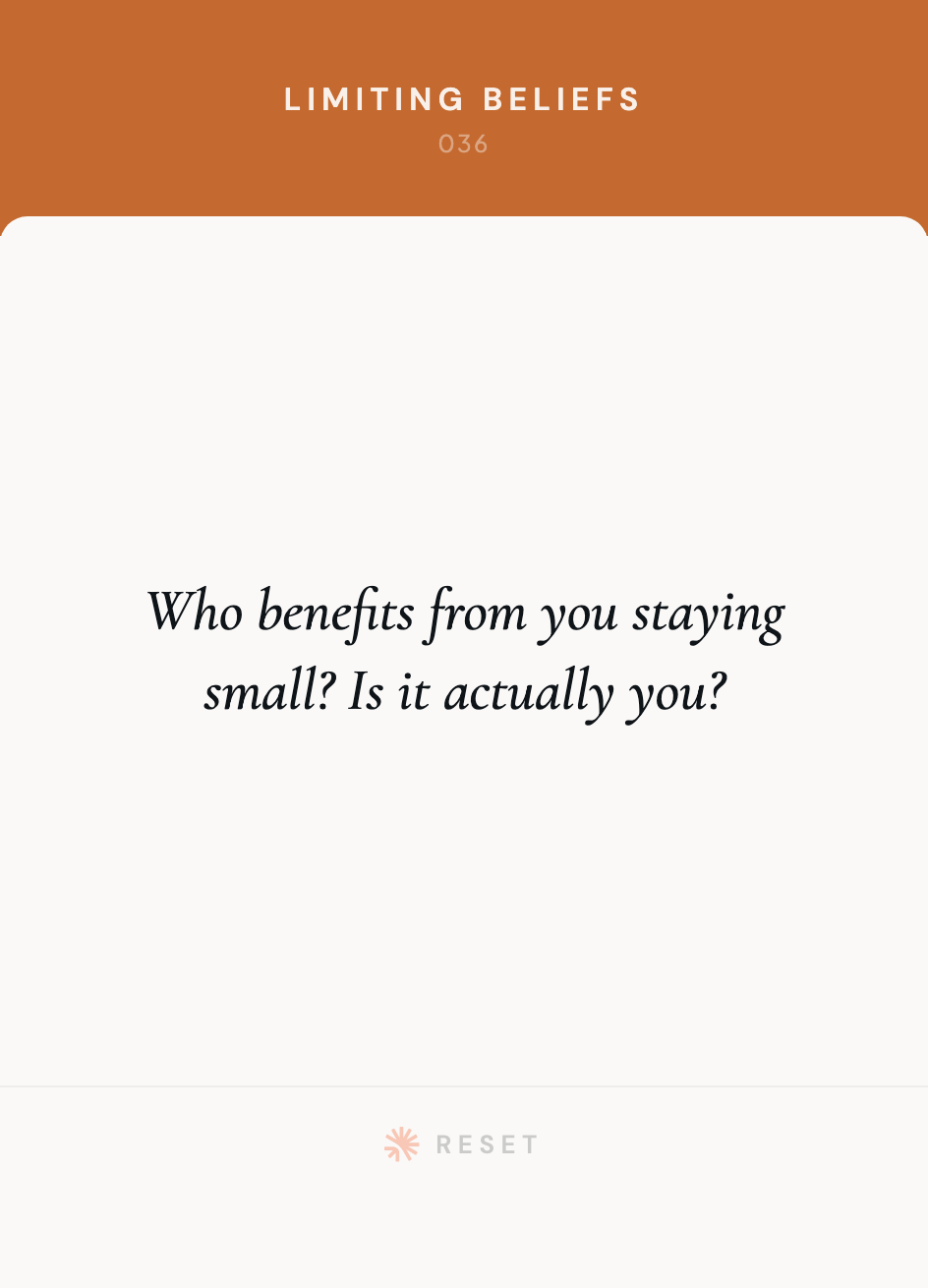
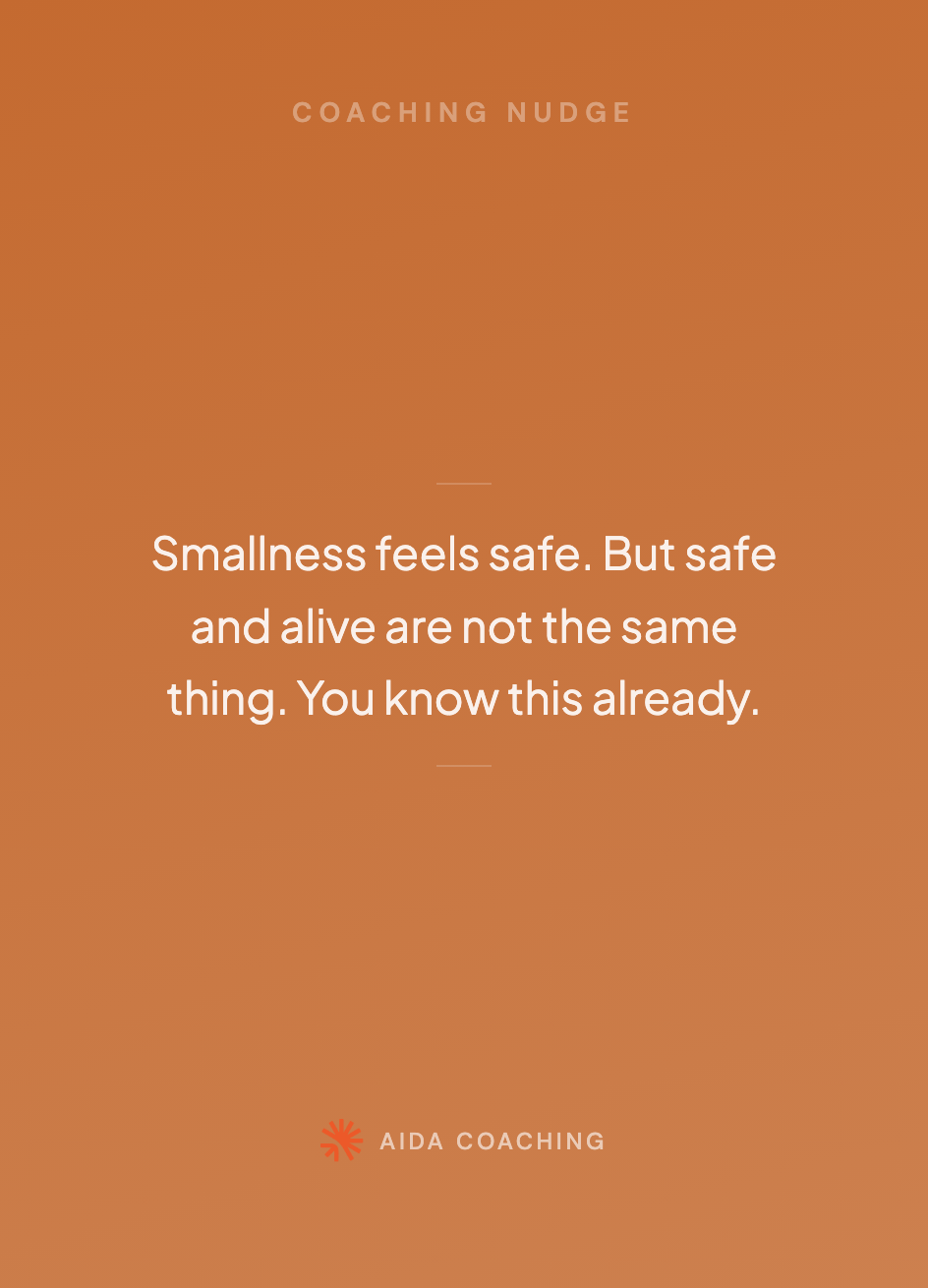
Whatever is in your way is rarely the thing you'd name first. It's usually older than the job, it's usually borrowed from someone else, and from the inside it sounds exactly like common sense.
The fuel
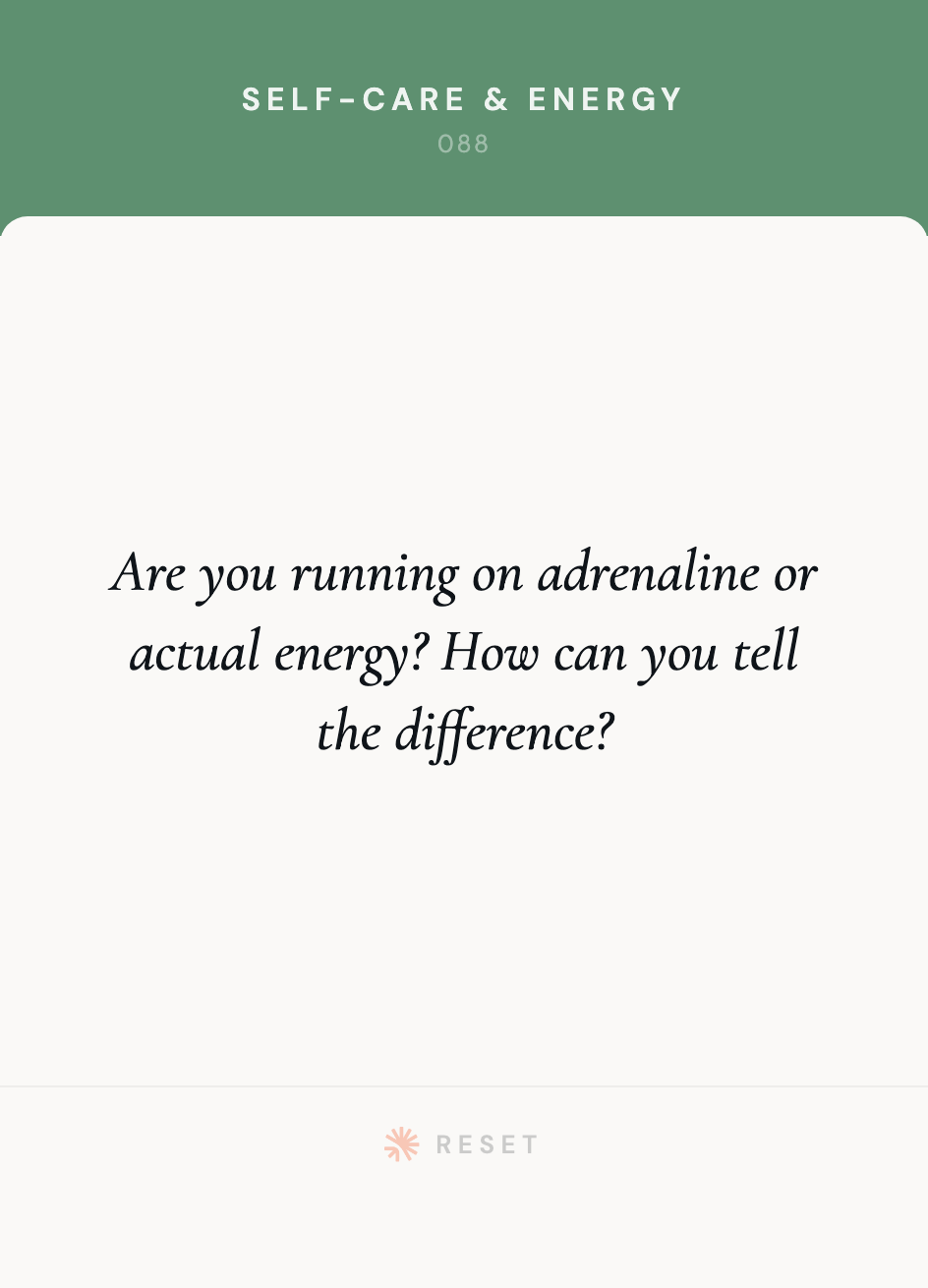
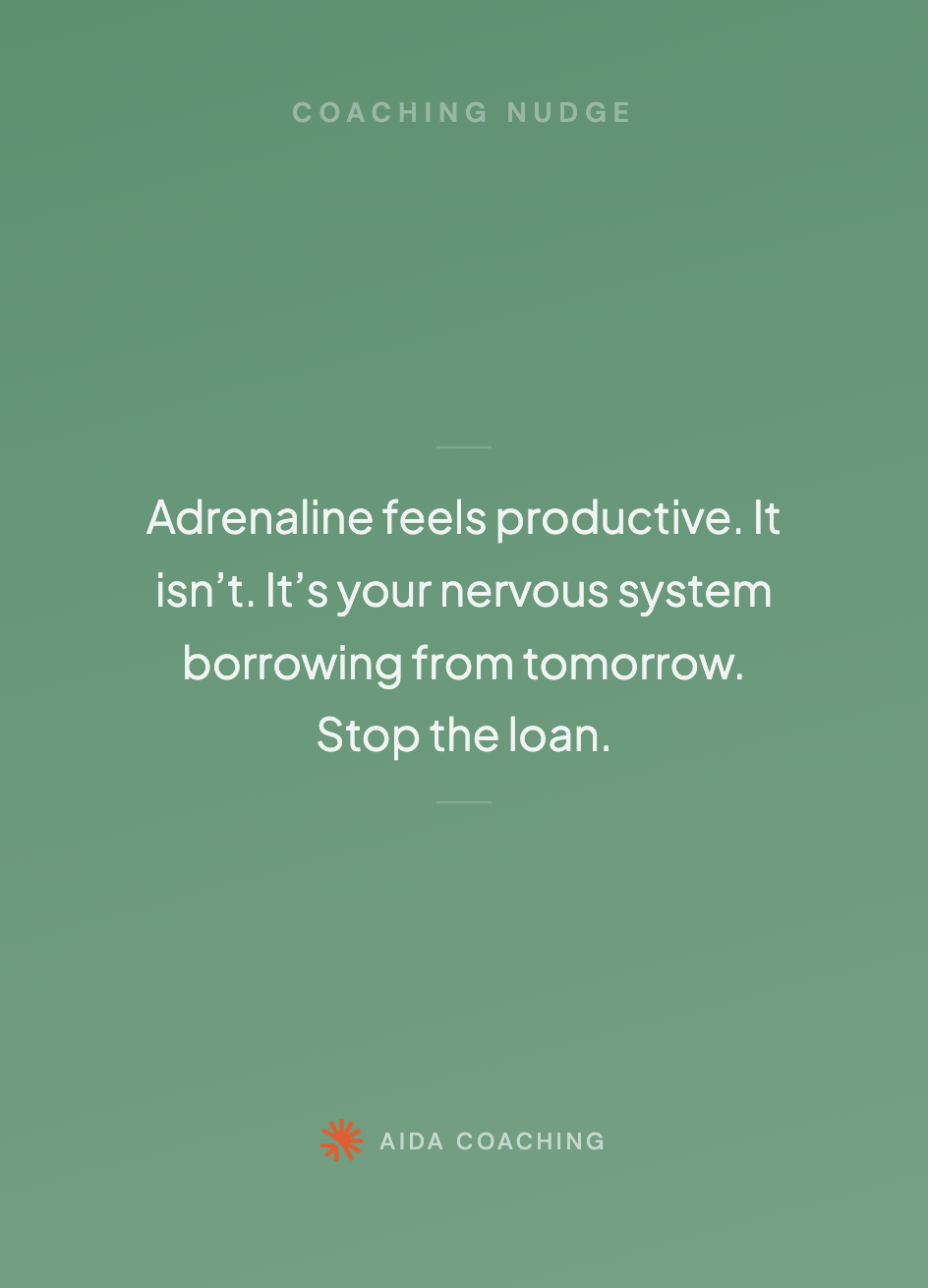
You can have the right direction and still not arrive, because there's nothing left to get there on. Adrenaline will cover the shortfall for a while. That isn't energy. It's your nervous system borrowing against tomorrow, on poor terms.
The direction
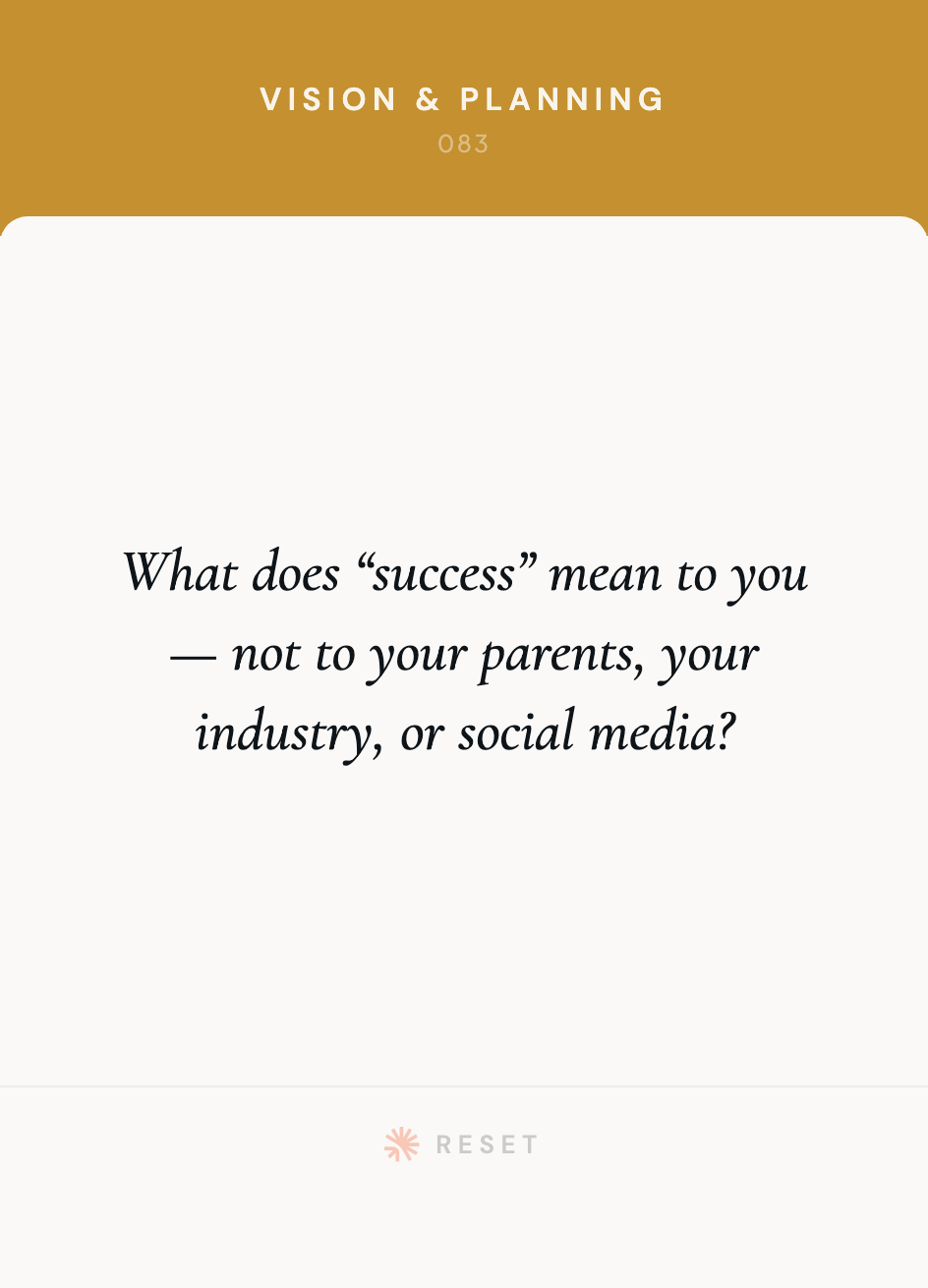
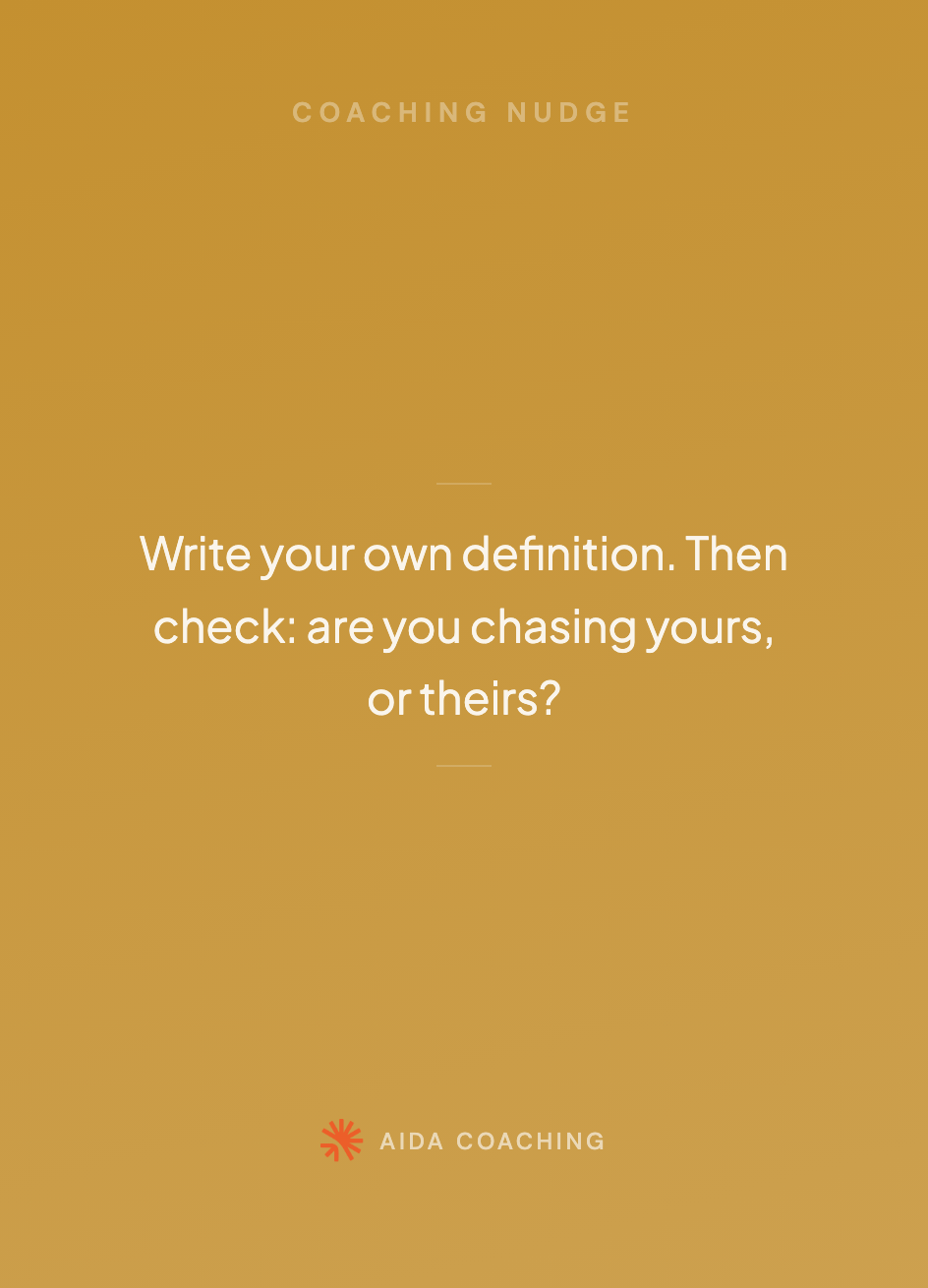
A better vision isn't a bigger one. It's one that's genuinely yours. Most capable people are running very hard at a definition of success they never consciously chose. That is an expensive way to spend a decade.
The move
A vision you never act on is just a more comfortable way of staying put. This is the question that costs something, and the only one on the list that changes anything.
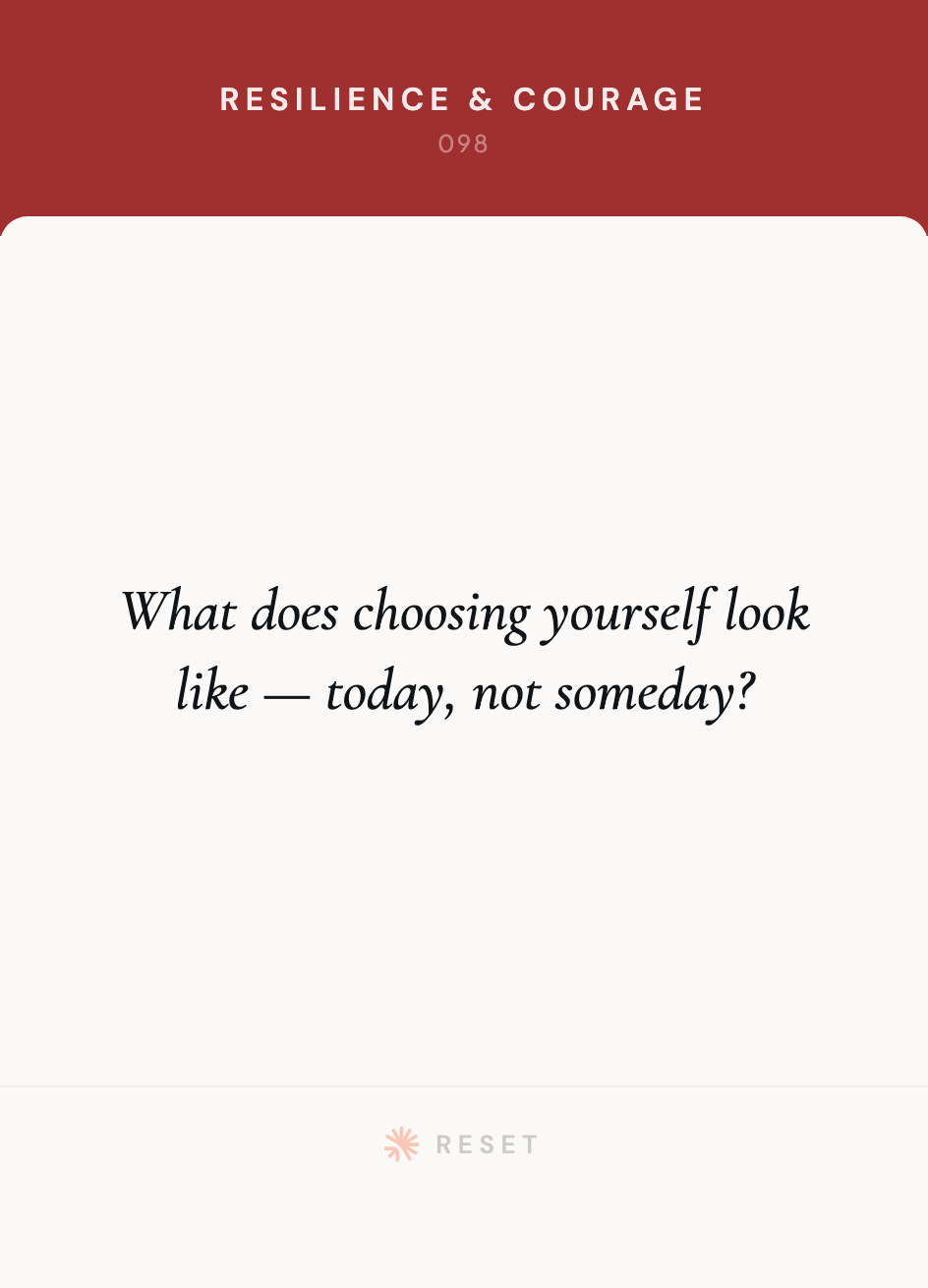
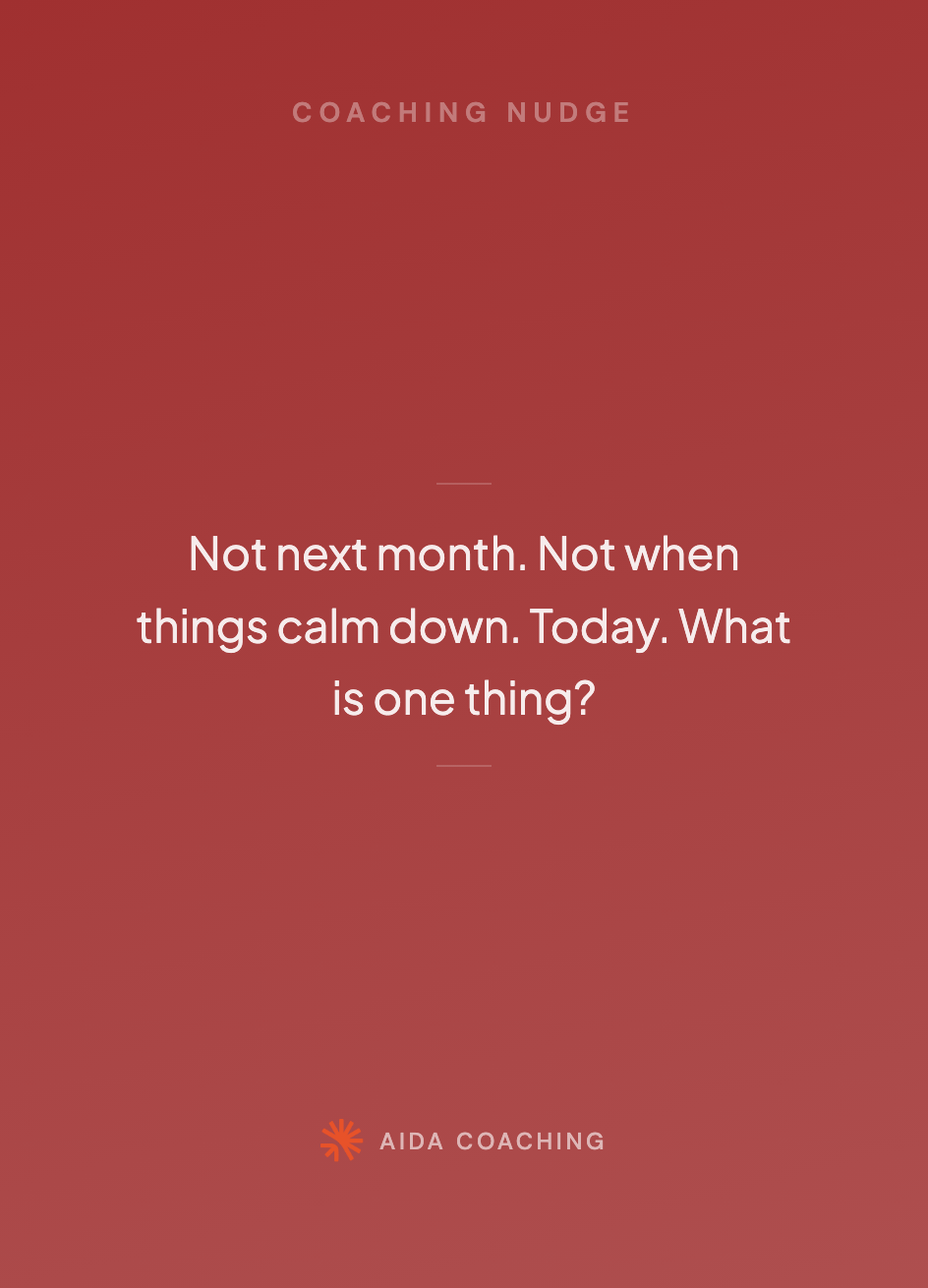
“For the first time in a long time I have a clearer view of myself and where I would like my journey to go. I have renewed confidence and self-belief. Do it! You won't regret it.”
There are ninety-five more.
Those five map the route. The deck walks it properly: 100 questions across 12 themes, so you're not leaning on the same five you now half-remember. You shuffle, draw one, and let the card choose the conversation instead of steering yourself towards the safe one.
Every question in it earned its place in a real coaching session with a founder, an executive or a senior leader. And on the back of each card there's a nudge like the ones above: the thing I'd say next if we were in the room together.
The twelve themes
“Having been so indecisive as to whether these would work for me I took the plunge and got them and not regretted it”
“Love these cards, pick a card and work with the suggestion. Journal, exercise whatever you feel you need to do. Beautifully made too just the right size & neatly packed in a sturdy box. Delighted I purchased them.”
Every one of Aida Coaching's 18 reviews on Trustpilot is five stars.
Get the cards now
100 coaching questions. 12 colour-coded themes. A coaching nudge on the back of every card. Printed on 400gsm soft-touch board in a rigid lift-lid box, built to sit on a desk rather than in a drawer.
Keep it for fourteen days before you decide. Draw a card each morning. If it hasn't earned its place on your desk, email me and I'll refund the deck.
Outside the UK? Email hello@aidacoaching.com and we'll sort shipping for you.

Why I made these
I kept noticing the same thing in sessions. The people in front of me were extremely good at answering questions about their teams, their targets and their quarter — and had almost no practice at answering one about themselves. Not because they couldn't. Because nobody had asked, and because there is always something more urgent.
So I took the questions that did the most work in those sessions, kept the ones that consistently landed, and put them on cards. No app, no login, nothing to charge. Just the question, and the thing I'd say next.
“Highly structured and builds on itself week-on-week, with great content based in neuroscience and performance research. Practical and usable, and I have the tools to do it again.”